Mexico City: Seismic Building Lessons for Asia
Architects and engineers in Mexico City have used diverse materials, from Talavera tiles to steel frames, to address seismic activity and unstable lakebed conditions over centuries of construction.
Mexico City's Material Heritage and Engineering Challenges
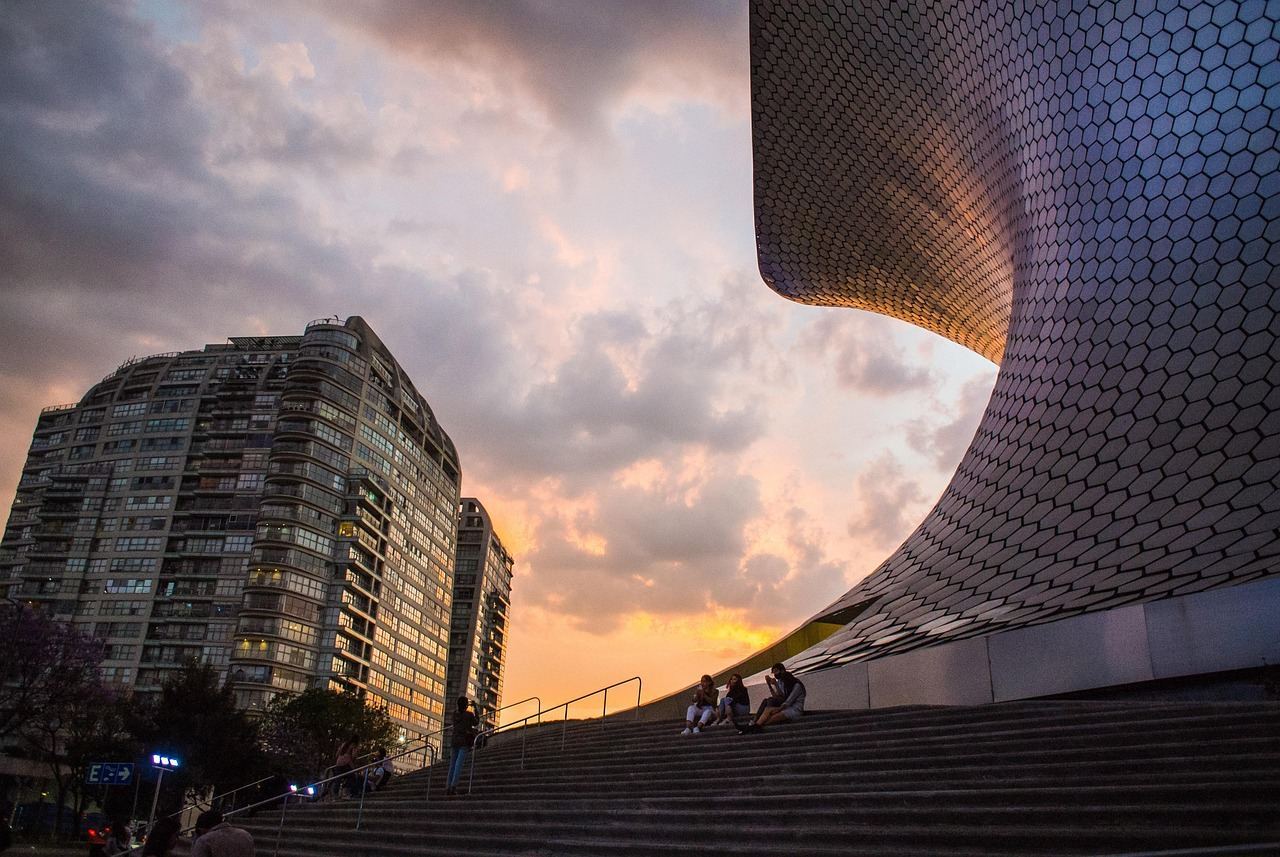
Mexico City's architectural history spans centuries, demonstrating diverse material applications and engineering approaches to building on a challenging lakebed site. Structures range from Baroque stone and Neoclassical marble palaces in the Historic Center to modern steel-framed skyscrapers.
The city's unstable ground, originally a drained lake, has necessitated innovative construction techniques. Notable examples include the Metropolitan Cathedral, completed in 1813, and the Palacio de Bellas Artes, finished in 1934, both of which have experienced significant sinking into the soft lakebed. This long history shows the constant adaptation of building materials and methods to environmental conditions.
Adapting to Seismic Activity with Steel and Glass
The Torre Latinoamericana, a 44-story skyscraper completed in 1956, stands as a key example of structural engineering in a seismic zone. Designed by Leonardo and Adolfo Zeevaert, its floating foundation with deep piles allowed the glass and steel tower to withstand major earthquakes in 1957 and 1985 with minimal damage.
This structural resilience earned it international recognition. Beyond modern solutions, traditional materials also show adaptability. The Casa de los Azulejos, an 18th-century palace, features a facade covered entirely in blue and white Talavera tiles from Puebla, a distinctive and durable finish that remains intact today, showcasing regional material sourcing.
Stone, Bronze, and Decorative Finishes
Throughout Mexico City's landmark buildings, a variety of materials contribute to both structural integrity and aesthetic detail. The Palacio Postal, completed in 1907, combines a modern steel frame with Chiluca stone carvings in Venetian Gothic and Plateresque styles.
Its interior features a double staircase crafted from bronze and cast iron, manufactured in Florence, illustrating the integration of advanced European fabrication with local stone.
Similarly, the Palacio de Bellas Artes' exterior uses white Carrara marble and is crowned with distinctive orange and yellow tiled domes, while its interior incorporates Mexican motifs in Art Deco style. The theater's glass curtain, designed by Dr. Atl and made by Tiffany, further exemplifies specialized material applications.
Actionable Insights for Asia's Building Materials Sector
Mexico City's long history of construction on unstable, seismic ground offers concrete lessons for Asia's construction sector, particularly for projects in similar challenging environments.
Developers and specifiers in Asia can consider the proven efficacy of deep pile foundations for high-rise structures in seismic zones, as demonstrated by the Torre Latinoamericana’s performance in the 1957 and 1985 earthquakes.
The successful integration of locally sourced materials like Talavera tiles and Chiluca stone with globally manufactured elements such as Carrara marble and Florentine bronze components points to effective hybrid sourcing strategies.
For upcoming projects, procurement teams should specifically inquire about the seismic performance ratings and foundation engineering details of structural materials, and investigate local artisan networks for unique decorative finishes and tiles, balancing cost with regional authenticity.
Get The Materials Brief.
The week in materials, projects and sourcing, every Tuesday. Free.