US importer challenges duties on New Zealand processed Canadian cedar
Coastal Forest Products is fighting a customs ruling that 11 processing steps in New Zealand were insufficient to change the origin of Canadian western red cedar.
Court Challenge Over Cedar Origin
A distributor based in New Hampshire, Coastal Forest Products, has initiated legal action against US Customs and Border Protection at the US Court of International Trade. The company filed its summons and complaint on October 10, 2026, challenging a customs finding that western red cedar, after being resawn and kiln-dried in New Zealand, still retains its Canadian origin.
This classification subjects the lumber to duties typically applied to Canadian softwood. Coastal Forest Products argues that the material underwent a “substantial transformation” in New Zealand, which should reclassify its country of origin and remove it from the Canadian duty orders.
This argument has been rejected twice by the agency, with the Office of Regulations and Rulings upholding the initial finding in May 2026 and reaffirming it upon review in September 2026.
Customs Findings at Hermpac Plant
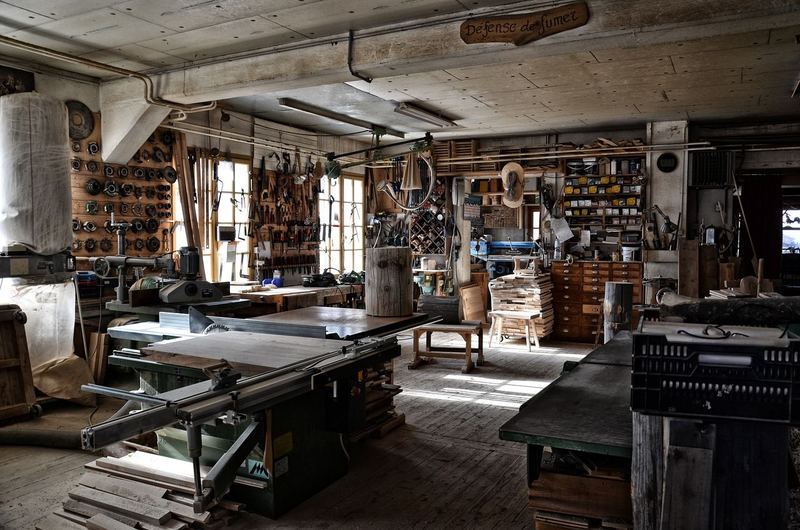
The customs finding followed a four-day inspection in January 2026 at the New Zealand plant of Herman Pacific, trading as Hermpac, located in Silverdale, north of Auckland. Officers counted 11 operational steps during their visit. However, the May 2026 determination stated that most of these steps did not physically alter the wood beyond drying.
Hermpac, which was founded in 1974 and has depots in Wellington and Christchurch, described itself to customs as a “secondary manufacturer” performing “downstream processing including resawing and optimization.” The company is listed by the Western Red Cedar Lumber Association as offering band resawing, custom kiln drying, planing, and moulding services.
Trade data indicates that Hermpac imports western red cedar from British Columbia’s Western Forest Products, the Canadian company named in the record.
Duty Implications and Legal Framework
The allegation against Coastal Forest Products was lodged in June 2025 by the US Lumber Coalition, an alliance of American softwood producers.
Zoltan van Heyningen, executive director of the coalition, stated in May 2026 that “transshipment of lumber into the United States via a third country to evade antidumping and countervailing duties is not tolerated, nor possible.” The customs ruling applies solely to Coastal as the importer, with no evasion finding against the Canadian producer or its New Zealand customer.
Currently, Coastal’s entries are subject to the British Columbia producer’s duty rate, while most Canadian producers pay a combined deposit of 35.16 percent under Commerce’s sixth review. Liquidation on all covered entries has been suspended since June 2024, and Coastal continues to post cash deposits for new cedar shipments.
Under the Enforce and Protect Act (EAPA), the court will determine if customs followed its procedures and if its finding was “arbitrary, capricious,” or otherwise unlawful. The United States is scheduled to file the complete Customs record, including the January 2026 verification, by mid-November 2026.
Implications for Asia-Pacific Wood Trade
This ongoing legal challenge highlights the stringent interpretation of “substantial transformation” by US customs authorities, which has direct implications for wood processors in the Asia-Pacific region, including New Zealand.
Processors in countries like New Zealand that import raw timber for re-processing and re-export must scrutinize their operational steps to ensure they demonstrably alter the material sufficiently to qualify for a change in origin.
Companies engaged in activities such as resawing, kiln-drying, planing, or moulding, particularly those handling western red cedar or similar softwoods, should review their processes against the 11-step assessment framework used by US Customs.
This will help them anticipate potential duty challenges and ensure proper documentation for their shipments to major markets, mitigating risks of similar disputes.
Get The Materials Brief.
The week in materials, projects and sourcing, every Tuesday. Free.