Thailand's WPC Roots Retain 88cm Sediment, Combat Erosion
A new study reveals a bio-inspired system, featuring wood-plastic composite and rubber structures, retained 16-88 centimeters of sediment across 10 sites in Samut Prakan province.
New Approach for Thailand's Eroding Coastline
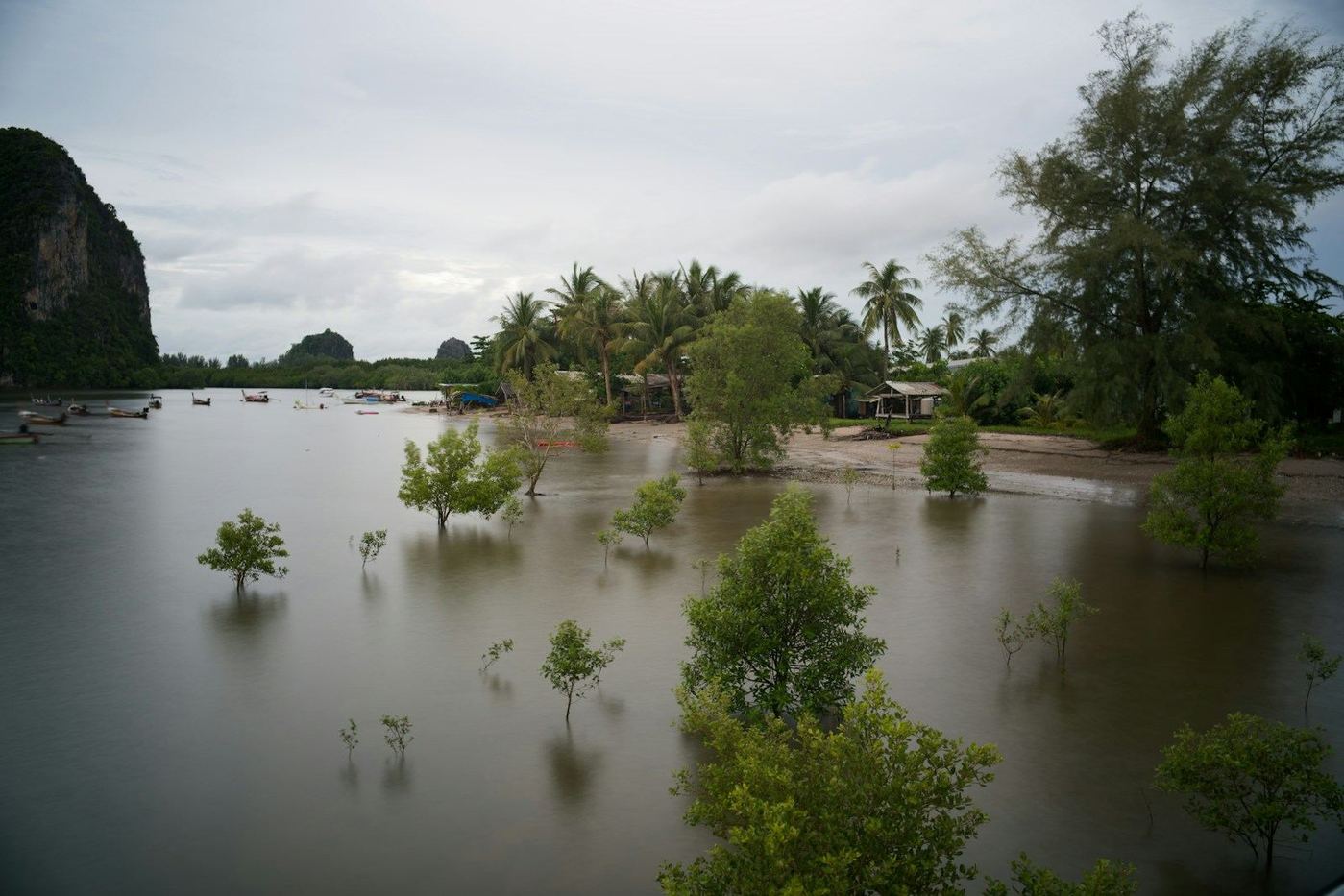
Communities in Phra Samut Chedi, a district within Thailand's Chao Phraya River Delta, are grappling with significant coastal erosion. This area, where the Chao Phraya River meets the Gulf of Thailand, experiences land loss ranging from 20 to 60 meters annually, impacting farmland and necessitating home relocations.
Traditional methods, including mangrove restoration and bamboo fences, have shown limited effectiveness against the high wave energy and land subsidence in the region. A recent study, published in *Ocean & Coastal Management*, proposes that an engineered solution mimicking natural mangrove roots could offer a viable stopgap.
Trial Results Show Sediment Retention
The artificial mangrove root system underwent trials at 11 locations across Phra Samut Chedi and other parts of Samut Prakan province over a 15-month period. Researchers observed varying degrees of sediment deposition at 10 of these sites. The recorded sediment retention ranged from 16 to 88 centimeters, with success dependent on specific local conditions.
Butsawan Bidorn, a senior author of the study and assistant professor of coastal engineering at Chulalongkorn University in Bangkok, noted that the dynamic nature of the Chao Phraya Delta requires quick and accessible solutions to address rapid land loss.
Bio-Inspired Design and Materials
Initially designed by researchers at Kasetsart University in Bangkok in 2016 and later refined by teams at Chulalongkorn University, the system replicates the physical function of natural mangrove roots. Each unit features a central trunk made from a wood-plastic composite, with rubber projections extending outwards.
These projections are engineered to dissipate wave energy and trap sediment effectively. Multiple units are assembled onto modules measuring between 50 and 120 meters, which are then installed in rows to form a permeable coastal barrier. This modular, lightweight design facilitates rapid manufacturing and installation using readily available materials.
Implications for Coastal Infrastructure Procurement
For procurement teams and specifiers involved in coastal protection and infrastructure projects across Asia, these trial results suggest a practical, intermediate pathway for shoreline stabilization.
The deployment of bio-inspired engineered structures, specifically those utilizing wood-plastic composites and rubber for wave energy dissipation and sediment trapping, offers a rapid alternative to conventional hard engineering or less successful natural restoration efforts.
Projects in erosion-prone coastal zones, particularly those with high wave energy, can consider specifying such modular, nature-based material solutions to establish physical conditions that support long-term ecological recovery.
Get The Materials Brief.
The week in materials, projects and sourcing, every Tuesday. Free.