Kenta Yoshizawa's Red Craft Collection: Kumihimo, Washi, Bamboo, Urushi for Furniture
Kyoto-based designer Kenta Yoshizawa developed the Red Craft Collection, translating four traditional Japanese craft techniques—bamboo fencing, kumihimo braiding, washi paper art, and urushi lacquering—into contemporary domestic items. The collection features furniture, lighting, and storage objects designed for modern interiors, emphasizing the integration of traditional materials and production methods.
Traditional Japanese Crafts Reinterpreted for Modern Interiors
Designer Kenta Yoshizawa, based in Kyoto, created the Red Craft Collection, also known as Akai Kogei, to adapt established Japanese craft techniques and materials for contemporary daily use. The collection focuses on a vibrant red color palette and explores four distinct craft traditions: bamboo fencing, kumihimo braided cord, washi paper, and urushi lacquer.
These techniques are applied across various domestic objects, including furniture, lighting, and storage solutions. The project demonstrates how traditional materials and their production methods can be integrated into familiar interior settings while preserving their inherent craft characteristics.
Each item combines functional use with visible references to its material origin and manufacturing process, establishing a connection between historical Japanese craftsmanship and modern object design.
Bamboo and Kumihimo Techniques for Furniture
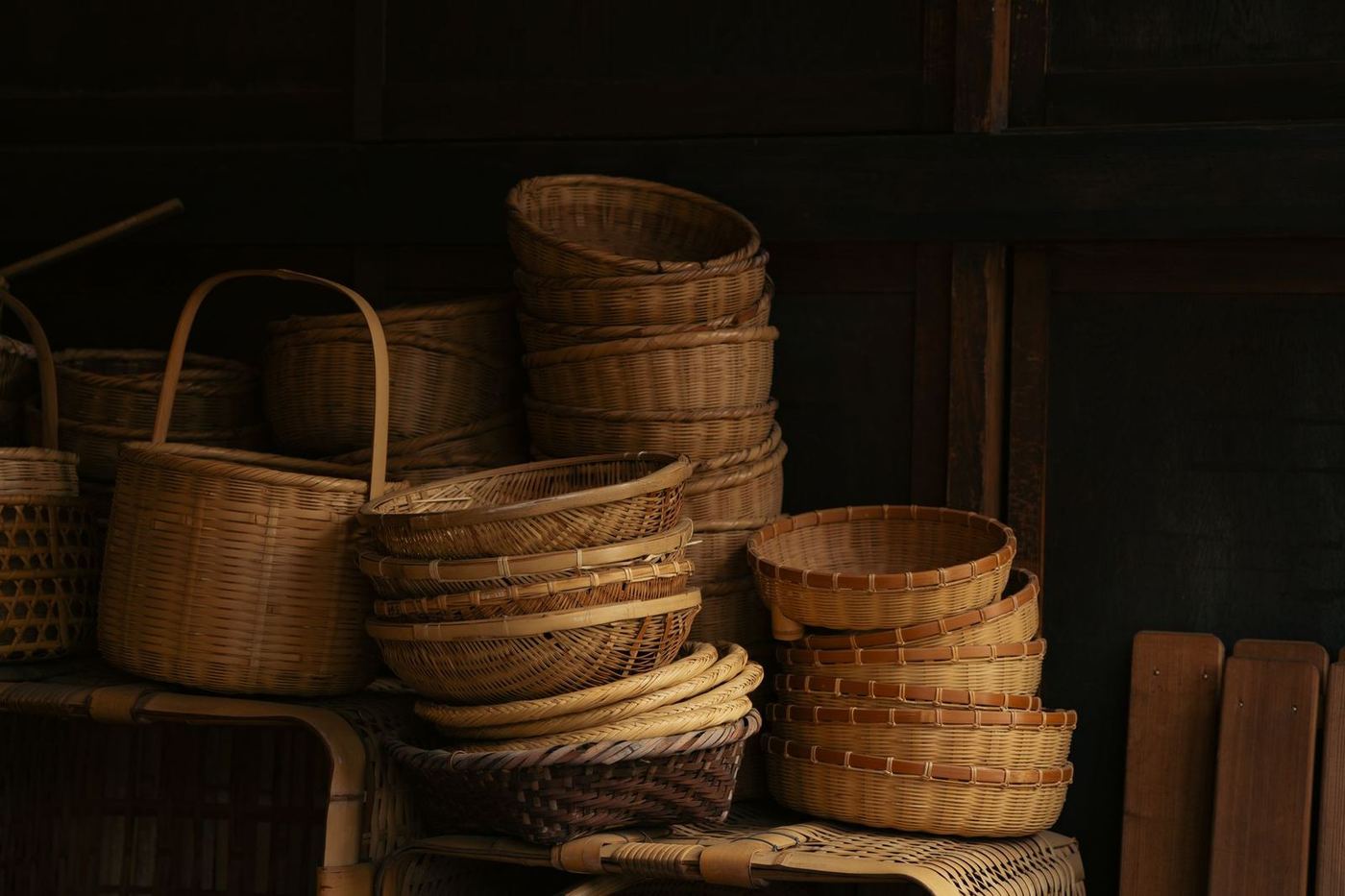
The Red Craft Collection includes 'n shelf', a leaning shelf designed by Kenta Yoshizawa and manufactured by Nagaoka Meichiku. This piece draws inspiration from traditional Japanese bamboo fencing techniques, specifically the n-shaped silhouette of Sodegaki bamboo screens. Yoshizawa adapted this profile into a freestanding furniture item.
The bamboo material is shaped by hand using a gas burner, which heats and bends it to create the curved upper and lower sections while maintaining the bamboo’s natural flexibility. Another item, 'kumino', serves as both a stool and a side table.
Developed by Yoshizawa around the kumihimo braiding process and manufactured by Shoen Kumihimo, its construction involves braided cords passing through upper and lower frame sections. Natural lava stones weight the cord ends, referencing the 'tama' weights traditionally used in kumihimo production to maintain tension during braiding. This design makes the braided cords and their tension an integral, visible part of the object’s structure.
Washi Paper and Urushi Lacquer in Lighting and Storage
The collection also features 'stickstick', a lighting object composed of slender metal rods and handmade Inshu Washi paper, designed by Kenta Yoshizawa. The rods are engineered to sway with air movement, allowing light from below to illuminate the paper elements attached to their ends.
This introduces a dynamic element of changing movement to the object, combining metal structure, handmade paper, and light into an interactive display of material, motion, and illumination. Additionally, 'usahako' is a rabbit-shaped container constructed from washi paper and finished with traditional urushi lacquer, with the lacquer coating applied by COCOO.
The lacquer reinforces the paper structure and provides a smooth, lustrous surface. This object functions as a container for small items and can also serve as a standalone decorative piece on various domestic surfaces.
Implications for Asia's Procurement and Specification
For procurement directors and specifiers across Asia, the Red Craft Collection demonstrates actionable methods for integrating authentic Japanese craftsmanship into contemporary interior projects.
The detailed application of techniques like bamboo bending by Nagaoka Meichiku, kumihimo braiding by Shoen Kumihimo, and urushi lacquering by COCOO, alongside the use of specific materials such as Inshu Washi, provides concrete examples of specialized suppliers and their capabilities.
Project managers and designers seeking unique FF&E and decor items can explore these traditional craft sectors for custom commissions or to source products that offer a distinct cultural narrative and material integrity. This approach supports regional artisans and offers differentiated products for hospitality, residential, and commercial fit-outs in Asia.
Get The Materials Brief.
The week in materials, projects and sourcing, every Tuesday. Free.