Indonesia's Forest Clearing Policy: Land Permits Contradict Halt
Despite a government announcement to halt forest expansion for rice, 5.67 million hectares were recently designated for utilization permits, while 11,500 hectares for rice and 40,000 hectares for sugarcane have already been cleared in Papua.
Indonesia Shifts Stance on Forest Land for Rice
Indonesia's government stated it no longer requires the expansion of rice cultivation into forest areas, according to Presidential Special Envoy for Climate and Energy Hashim Djojohadikusumo on October 6.
Hashim Djojohadikusumo announced that Indonesia achieved rice self-sufficiency three years ahead of schedule, eliminating the need for the previously allocated 2 million hectares for food production. President’s Special Envoy for Multilateralism and International Trade Mari Pangestu added that future food and biofuel production would instead focus on degraded land.
This declaration suggests a departure from prior government initiatives that environmental groups characterized as extensive deforestation projects, particularly for rice and sugarcane plantations in southern Papua.
Conflicting Land Use Designations Emerge
The government's new stance appears inconsistent with recent actions by the Ministry of Forestry. Less than two weeks before Hashim Djojohadikusumo’s announcement, the Ministry designated approximately 5.67 million hectares of forest through its 2026 Forest Utilization Direction Map (PAPH).
These areas are open for proposals for forest-utilization permits, including those for food security, energy, and forest rehabilitation.
Musdalifah Jamal, a campaigner for essential ecosystems at the Indonesian Forum for the Environment (Walhi), highlighted this contradiction, noting that it shows the government has not yet abandoned a development approach that uses forest areas to meet food and energy demands.
Ongoing Forest Clearing for Food and Energy Estates
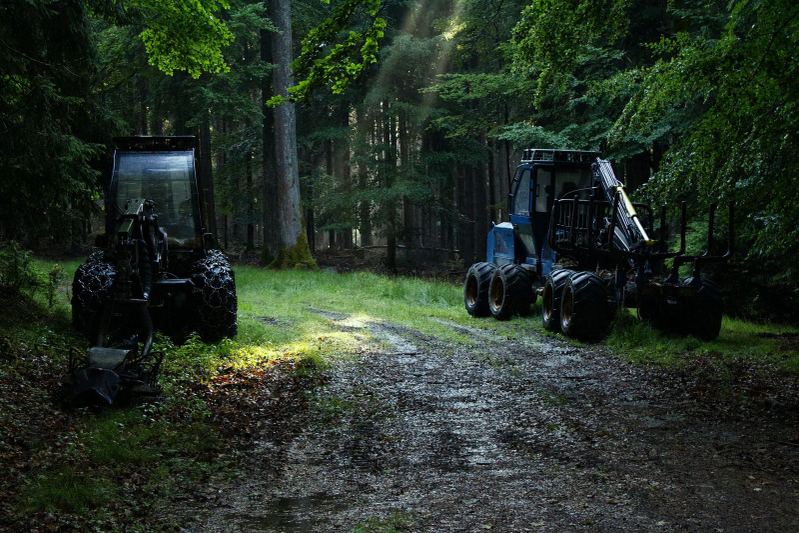
Despite the policy ambiguity, corporate heavy machinery continues to clear natural forests in several regions of Papua targeted for food estate programs. TheTreeMap, which operates the Nusantara Atlas forest-monitoring platform, reported that approximately 11,500 hectares of wetlands in Wanam and Wogikel villages have been cleared for rice cultivation.
Additionally, about 40,000 hectares have been cleared for sugarcane, primarily across primary forests and savannas near the border with Papua New Guinea.
This clearing activity has followed the construction of a 135-kilometer access road, intended to support 1 million hectares of planned rice fields in Merauke, with Sentinel-2 animation showing construction progress from May 2024 to August 2026.
Implications for Materials Sourcing and Project Development
The ongoing discrepancy between Indonesia’s stated policy and its implementation regarding forest land use creates uncertainty for building material and FF&E procurement teams across Asia. Continued deforestation for food and energy estates, especially for oil palm and timber plantations, directly impacts the availability and sustainability of wood products.
Specifiers and buyers sourcing timber, wood panels, or other forest-derived materials from Indonesia must verify the origin and land-use status of their supplies.
Project developers planning new construction in Kalimantan or Papua should anticipate potential delays or changes in land allocation, requiring diligent due diligence on permit validity and environmental impact assessments to ensure compliance and predictable project timelines.
Get The Materials Brief.
The week in materials, projects and sourcing, every Tuesday. Free.